What Size Car Turntable Do I Need
Nov 24,2026

The first question almost everyone asks about a car turntable is the simplest one: what size do I need? It sounds like it should have a one-line answer — measure the car, add a bit, done. But a platform that looks generously sized on paper can still leave a long car scraping a wall at full rotation, while a seemingly tight one turns the same vehicle without trouble.
The truth is that "size" is three separate measurements, and only one of them is the number printed in a catalogue. Get those three right and the diameter follows. Work through them in order, and by the end you will know exactly what to send an engineer for a firm recommendation.
The three measurements · Five checks before you size · Jump to the enquiry form
A residential turntable is a fixed piece of handling equipment built to order. The diameter is only one of the dimensions that decide whether a car turns cleanly. A supplier who takes the question seriously works from the following set of real, named measurements — not from a single catalogue number:
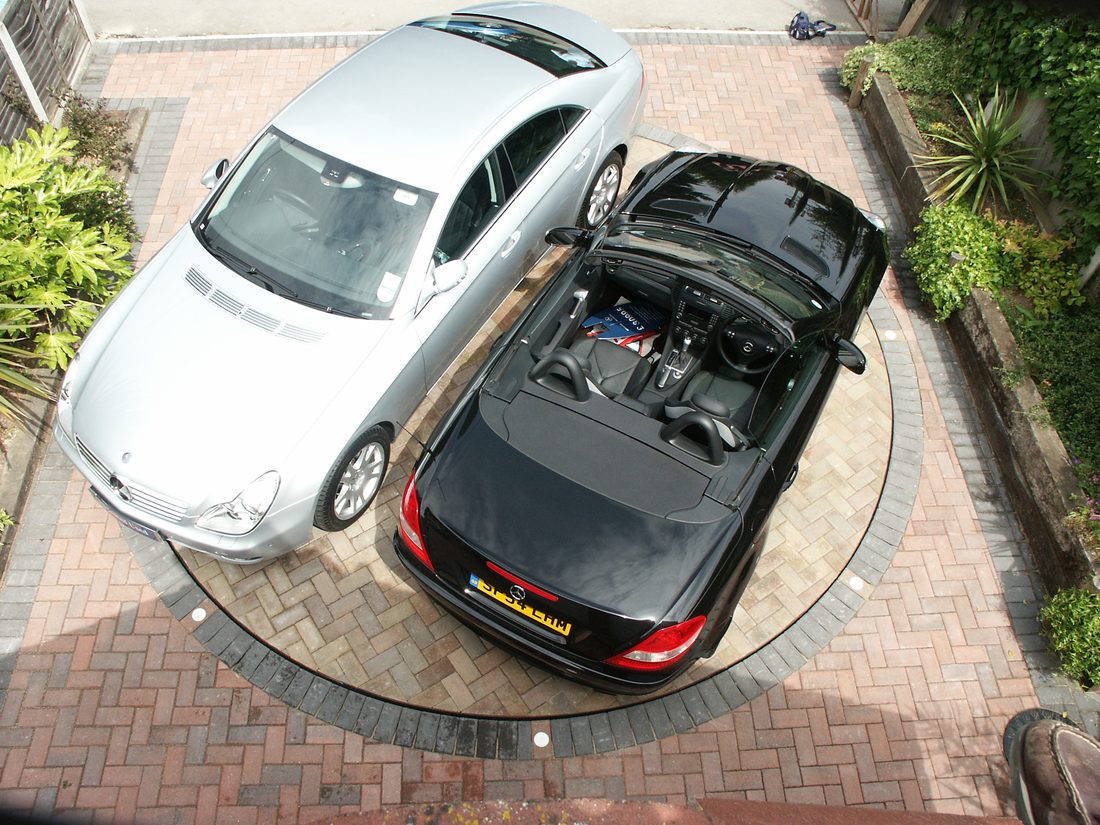
None of these is a decorative detail. The diameter is a consequence of the other lines, not a number you pick first. Here is how experienced buyers work out their size.
Work through those five and you will not be choosing a size from a list. You will be describing the space your particular car needs to turn, which is the only reliable way to specify a platform.
For most residential cars, a platform between roughly 4.0 and 6.0 metres in diameter covers the range — but the exact figure is set by your largest vehicle and your site, not by a rule of thumb.
Smaller cars and tight courtyards often sit at the lower end, while long-wheelbase vehicles, SUVs and full-size pickups push the diameter up. The deck finish and pit depth move with that choice: a recessed infill tray needs a different structure from a surface-mounted steel plate. This is a planning band, not a quotation, and the written specification for your configuration is the only binding number.
That is also why the figure is linked to cost. Diameter drives the amount of steel, the size of the bearing and the power of the drive. For how that translates into an EXW price band, see our car turntable cost guide. There is no charge for an initial sizing recommendation.
| Typical vehicle | Commonly considered diameter | What still needs checking |
|---|---|---|
| Small / compact car | 4.0–4.5 m | Confirm the actual body width and the wall clearance at full rotation. |
| Saloon / mid-size SUV | 5.0–5.5 m | Check wheelbase and where the tyres land; heavier EVs may need a higher load rating. |
| Long-wheelbase car / full-size pickup | 5.5–6.0 m or larger | Verify the swept path against gates, columns and the driveway opening. |
Indicative only. The platform diameter is confirmed from the swept-path drawing for your specific vehicle and site.
If you cannot tell which row is yours, that is exactly the gap worth closing. Send us your vehicle's length, width, wheelbase and track plus one photo of the site, and our engineers will confirm the diameter. Request a sizing recommendation →
The rest of this page is the detailed dimensional reference — kept visible for engineers, architects and anyone checking a specification line by line.
| What to provide | Why it sets the size |
|---|---|
| Length and width of the largest vehicle | These define the standing footprint. Length in particular drives the swept circle as the car turns about a fixed centre. |
| Wheelbase and track | They locate the tyre contact points on the deck and shape the rotation path, which is why a turning-circle figure is not a substitute. |
| Vehicle weight and load distribution | Heavier vehicles, especially long-range EVs, may need a larger bearing and a higher load rating as the diameter grows. |
| Driveway or garage opening | The entry width and the approach angle decide whether a car of that size can reach the platform at all. |
| Position of walls, columns, gates and kerbs | These form the real boundary of the swept area and often set the usable diameter more tightly than the platform itself. |
| Site slope and ground level | They decide the deck height, the pit depth and the ramp transition, which affect how much of the diameter is usable. |
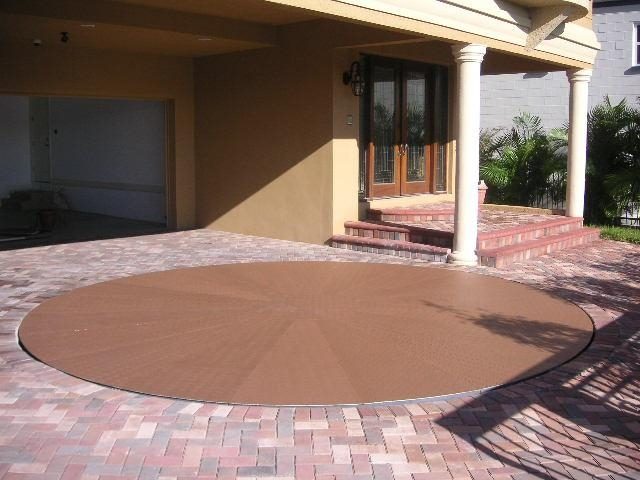
We do not pick a size from a model name. Using the dimensions above, our engineers draw the largest vehicle at full rotation over the proposed platform and compare it with the walls, gate and opening. That swept-path drawing is the document that settles the question, and it is supplied with the sizing recommendation.
Once the diameter is fixed, the load rating, deck finish and pit detail follow. Your written specification sets out each of them.
For most residential cars the diameter falls somewhere between about 4.0 and 6.0 metres. The exact figure is set by your largest vehicle and your site, so send the length, width, wheelbase and track of that vehicle plus the position of walls and gates. Our engineers return a swept-path drawing and confirm the diameter before you order.
No. A published turning circle describes a car steering on a road; a turntable rotates the car about a fixed centre. The swept path is different and usually needs more clearance. Give the supplier the vehicle dimensions and ask for a swept-path drawing rather than converting a turning-circle figure into a platform size.
That depends on the swept path, not only on the platform diameter. Provide the length, width, wheelbase and track of your SUV together with the position of walls, columns, gates and the driveway opening. A swept-path drawing at full rotation will show the clearance before you commit to a size.
A long-wheelbase pickup usually pushes the diameter toward the larger end of the residential range, often 5.5 to 6.0 metres or more. Length and wheelbase matter more than the cab style. Confirm the swept path against your gate and opening, and check that the load rating suits the vehicle's weight at the same time.
Not necessarily. A larger platform means more steel, a bigger bearing and more groundworks, and it is only worthwhile if your vehicle and site need the extra swept space. The right size is the smallest diameter that turns your largest car cleanly within the available opening, confirmed by a drawing rather than chosen from a catalogue.
Some double-length platforms are built for two vehicles parked end to end, but that is a different configuration from a standard single-car residential turntable. It needs a larger diameter or an elongated deck, a higher load rating and a swept-path check for both cars. Tell us the vehicles and the space, and we will confirm what is feasible.
Send us your vehicle's length, width, wheelbase and track, plus a photo and rough dimensions of the site. Our engineers will draw the swept path, confirm the diameter and return a written EXW quotation.