Driveway Car Turntable Site Checks Before You Build
Nov 25,2026

A driveway is not a garage floor. It slopes, it drains, it is paved, and it has a gate and a boundary on at least one side. A car turntable that works perfectly inside a level building can be awkward on an outdoor driveway for reasons that have nothing to do with the machine itself.
So before you compare diameters or ask for a number, there are site questions that decide whether a driveway turntable is straightforward, possible with extra work, or not a good idea at all. Answer these in order and the right configuration becomes obvious — and you will know exactly what to put in front of an engineer.
The site checks · Surface or recessed · Jump to the enquiry form
A residential turntable is a built-to-order piece of handling equipment. The parts that matter on an outdoor driveway are named, checkable things — not adjectives:
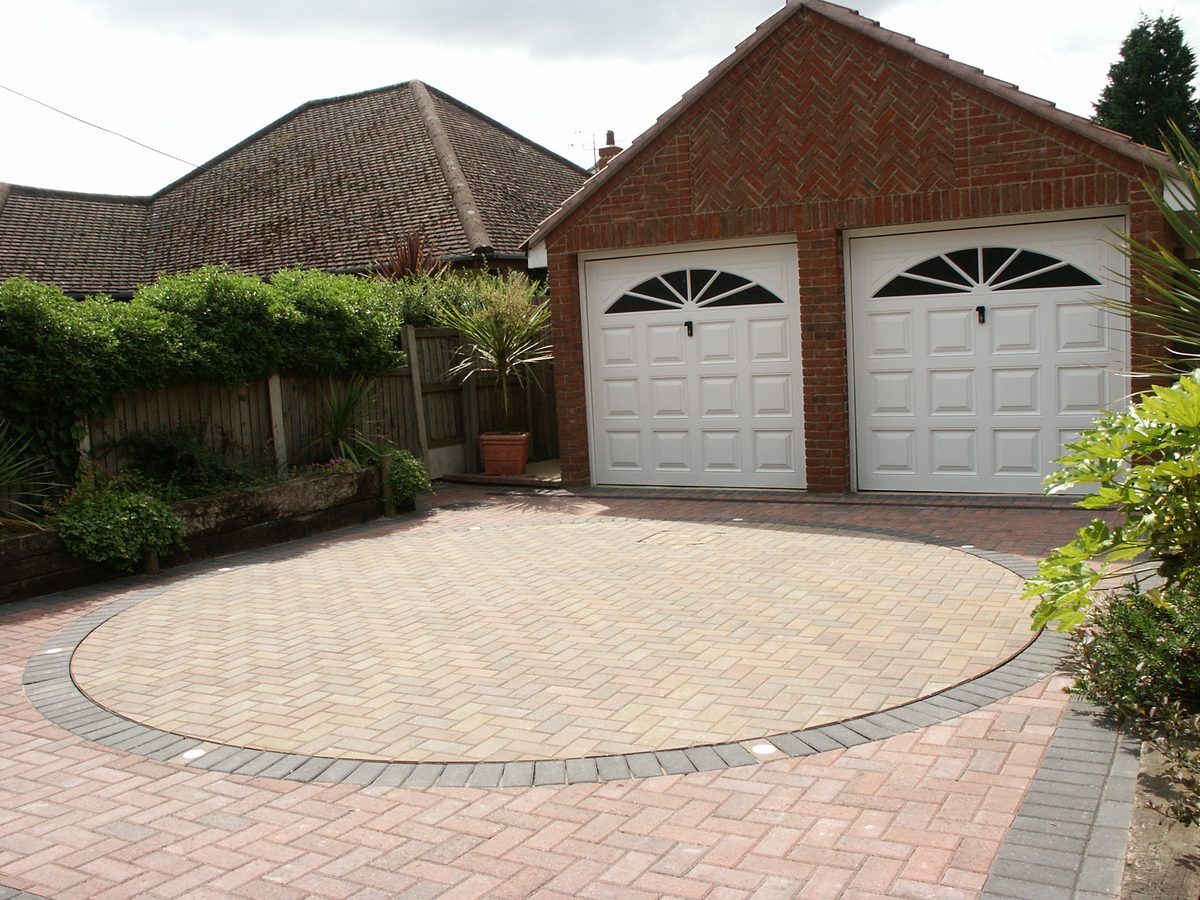
Every line above is affected by the driveway itself. Here is how to work through the site before you choose a build.
Do these five and you are no longer asking whether a turntable can go on a driveway in general. You are describing your driveway, which is the only question an engineer can answer properly.
Often yes — but the deciding factor is the site, not the car. Level or gently falling driveways with room at the gate are the straightforward cases; a steep fall or a drainage problem is what turns a simple installation into a groundworks project.
The deck build follows from those checks. A recessed infill deck keeps the driveway looking continuous but needs a pit and a drainage detail; a surface-mounted steel plate sits above the existing ground and changes the ramp transition at the entrance. Neither is automatically better — the right one depends on your fall, your paving and how the car enters.
Diameter is a separate question. If you have not fixed that yet, our car turntable sizing guide covers how the vehicle and the swept path set it. On a driveway the two answers meet: the size has to clear the boundary, and the boundary is what you just measured.
| Driveway condition | What must be checked | What usually follows |
|---|---|---|
| Level driveway, existing block paving | Paving pattern, cut line and infill border | Recessed infill deck keeping the same finish |
| Driveway with an existing fall | Direction and amount of fall, entry ramp, drainage path | Deck fall and collection point designed in, ramp detail adjusted |
| Narrow opening with gate or walls | Car swept path against the boundary at full rotation | Diameter and position set from a swept-path drawing |
| No usable drainage at the site | Where surface water can be taken | Drainage added as part of the groundworks before the deck |
Indicative only. The build is confirmed from your photographs, the measured fall and the swept path of your vehicle.
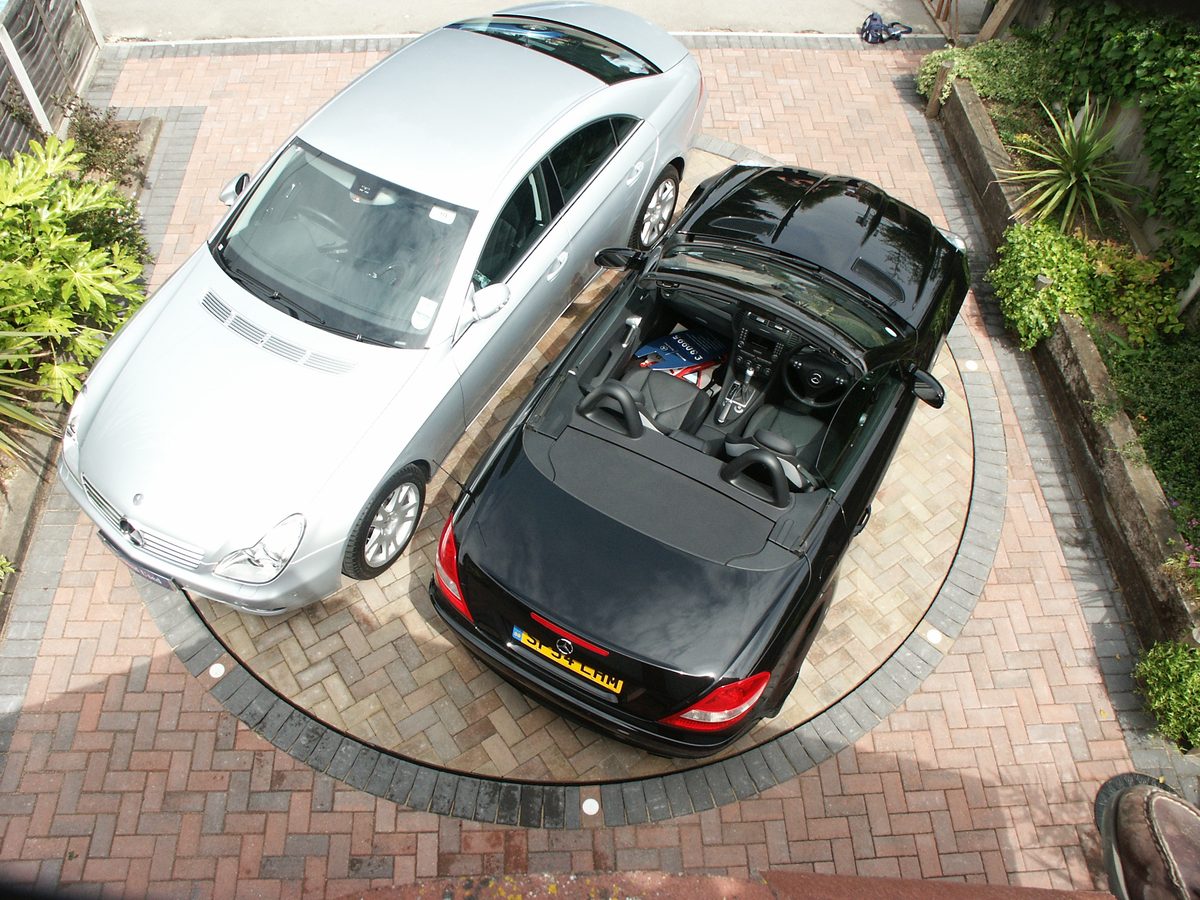
If you cannot tell which row describes your driveway, that is the gap worth closing. Send a wide photo and an overhead photo → and our engineers will tell you which checks matter for your site.
The rest of this page is the detailed reference for anyone checking a driveway specification line by line — kept visible, not hidden.
Both builds are used on residential driveways. The difference is where the deck sits relative to the existing ground and what has to happen around it.
| Point | Surface-mounted deck | Recessed infill deck |
|---|---|---|
| Position | Deck sits above the existing driveway level | Deck sits flush with the finished paving |
| Existing paving | Paving stays largely untouched; a ramp edge is added | Paving is cut and reinstated around an infill border |
| Ground works | Foundation plate and ramp transition | Pit, foundation, edge and drainage detail |
| Drainage | Surface fall and edge discharge must be detailed | Deck fall and collection point built into the infill |
| Entry transition | Ramp height has to suit the car's approach | Level entry, subject to the driveway fall |
On a driveway the motor, the control box and the whole machine face different conditions, so they are specified separately. Ask which parts are outdoor-rated, how the voltage, frequency and phase are confirmed for your country, and how the emergency stop and remote work. If a power cut matters to you, ask specifically what happens on restoration and whether a manual release or backup option is available for your configuration — a waterproof motor does not make the whole installation weatherproof.
Often yes, with a recessed infill deck finished in the same paving and an infill border cut to match the existing pattern. Whether it works depends on the paving you have, the fall across the driveway and where the cut falls. Send a photo of the surface and our engineers will confirm what can be kept.
A sloping driveway is not automatically ruled out, but it is not automatically ready either. The deck needs its own controlled fall and drainage, and the entry ramp has to meet the road without the car grounding. Measure the direction and amount of the fall and send a wide photo; the engineer will tell you what the site needs.
By a fall built into the deck leading to a collection point, tied into the drainage path for the driveway. A steel deck and a block-paved infill deck are detailed differently. The drainage is confirmed from the site fall and the existing water path, so it is part of the groundworks rather than an accessory.
That depends on the swept path, not only on the platform diameter. Give the length, width, wheelbase and track of the largest vehicle together with the gate opening and the position of walls and boundaries. A swept-path drawing at full rotation shows the clearance before you commit to a build.
The motor, the control box and the whole machine are specified separately for outdoor use. Ask which parts are outdoor-rated, how the local voltage, frequency and phase are confirmed, and how the emergency stop and remote behave. For a power cut, ask what happens on restoration and whether a manual release or backup option is available for your configuration.
Equipment and installed work are quoted separately. The equipment figure covers the turntable; the driveway groundworks - foundation, pit where needed, drainage and reinstatement of paving - are itemised on top so you can see what each part covers. Ask for both parts written out against your site before you compare offers.
Send a wide photo of the driveway, an overhead photo, and the dimensions of the gate opening and the fall. Our engineers will confirm which checks apply to your site and what build suits it.