01
Cross-Track Layouts
Suitable for track intersections where rail vehicles need to change direction.
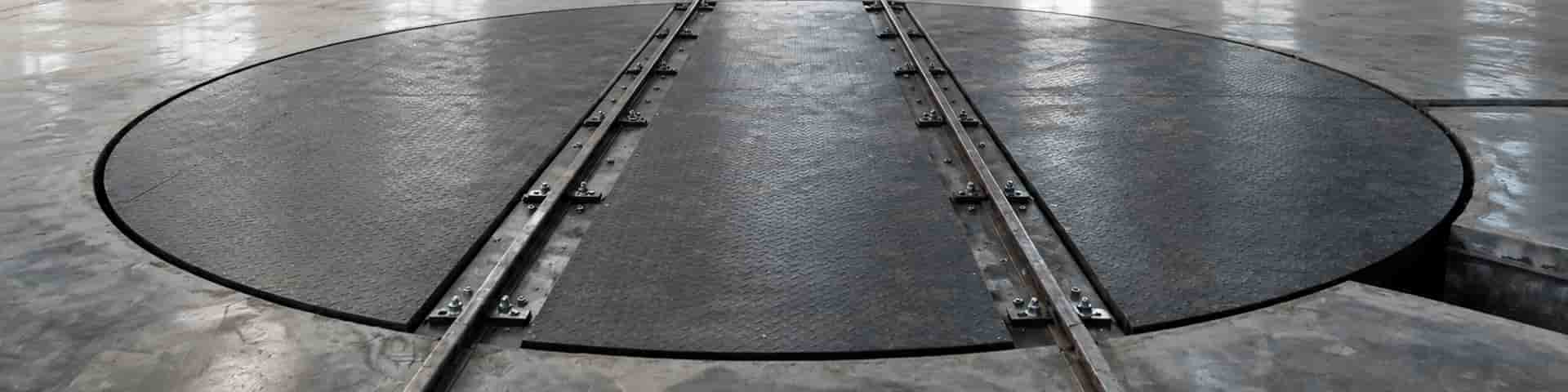
Eliminate the daily stress of navigating tight industrial spaces with our custom-engineered rail flatcar turntables. Designed specifically for heavy-duty workshop environments, our rotating platforms maximize your available space and efficiently change rail vehicle direction. Whether you are connecting multiple branch tracks or optimizing a cross-track layout, we ensure safe and precise 90° turns for your most critical routing needs.
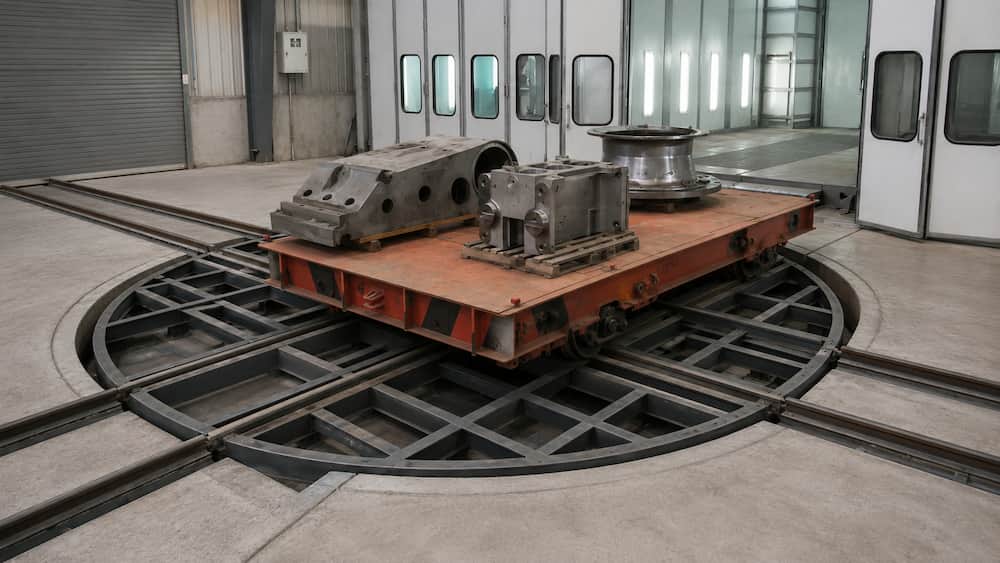
Rail flatcars normally move along fixed rail lines. When workshop layouts require 90° turns, branch tracks, or multiple routing directions, conventional curved tracks can require significant space. A rail turntable provides a compact way to change rail direction by rotating the platform and aligning its rails with the required track.
Suitable for track intersections where rail vehicles need to change direction.
Designed for branch-track arrangements where multiple directions need to connect within a limited area.
Can be configured for complex workshop layouts where rail routing requires controlled direction changes.
The rail flatcar enters the turntable, stops at the required position, and the platform rotates until its rails align with the destination track.
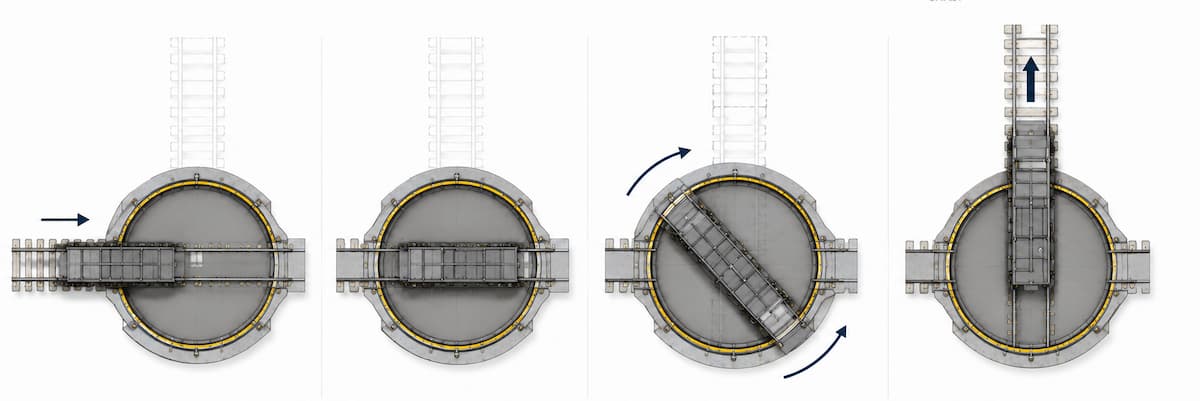
The rail flatcar enters the turntable along the existing track.
The flatcar stops completely on the turntable platform.
The turntable rotates to the required direction.
The platform rail aligns with the destination track, allowing the flatcar to continue its route.
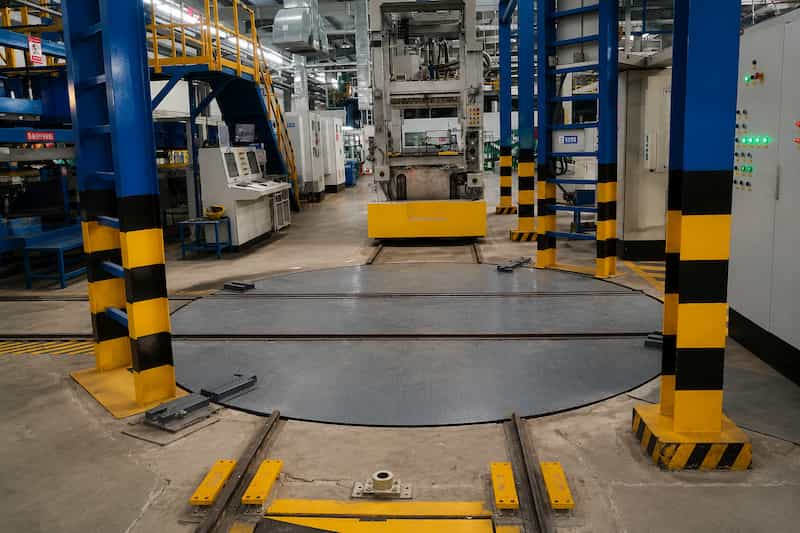
The RT4500-30T configuration uses a circular structural frame, central rotating support, distributed support wheels, and a pin-gear drive system to rotate the platform. Two P43 rails are installed on the platform with a 1050 mm center distance. The turntable is designed to rotate within a 0°–90° range and uses proximity-switch positioning for controlled stopping.
The turntable is built from a structural framework, central rotating support, distributed support wheels, drive components and integrated rail sections.
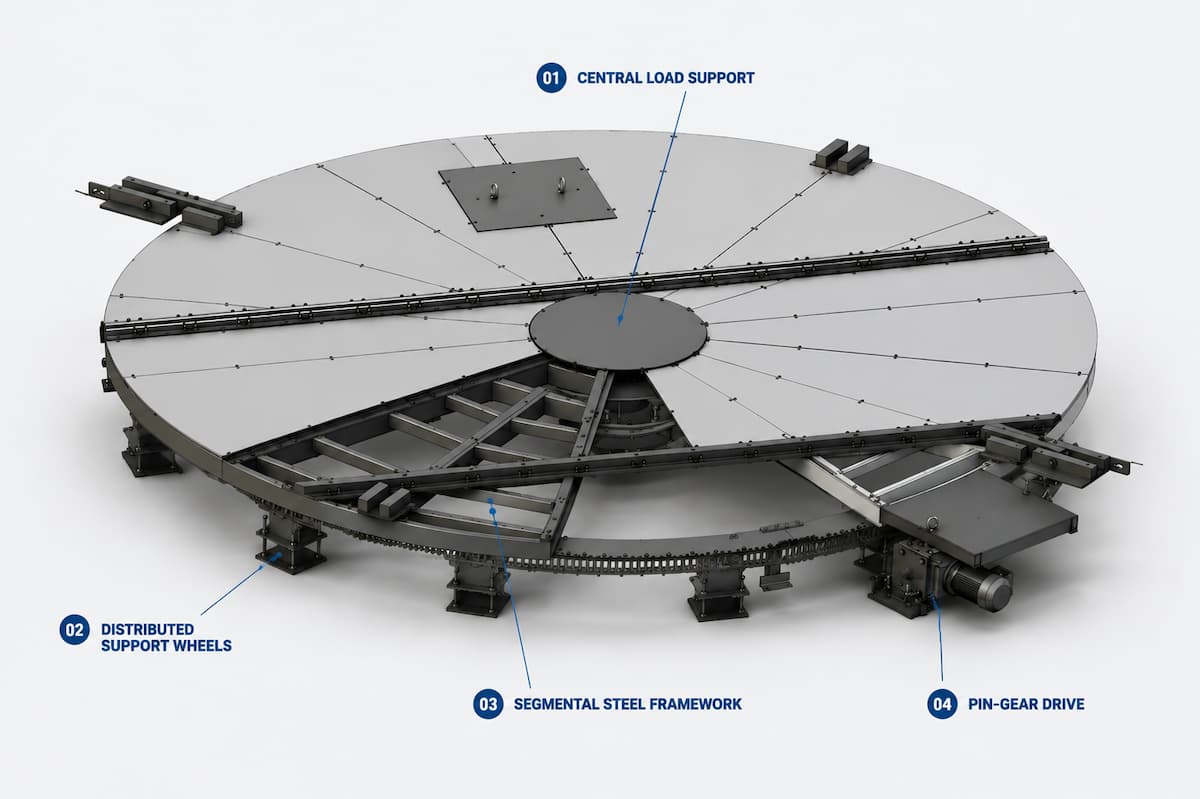
The central support assembly functions as a key load-bearing and rotating component of the turntable.
Support wheels are arranged around the circumference to support the turntable structure during operation.
Multiple structural segments are assembled into a complete circular framework.
A geared motor drives the pin-gear system, generating the rotational movement of the platform.
For a rail turntable, the rotating platform must integrate accurately with the surrounding track system. Accurate rail alignment is essential for safe and reliable operation.
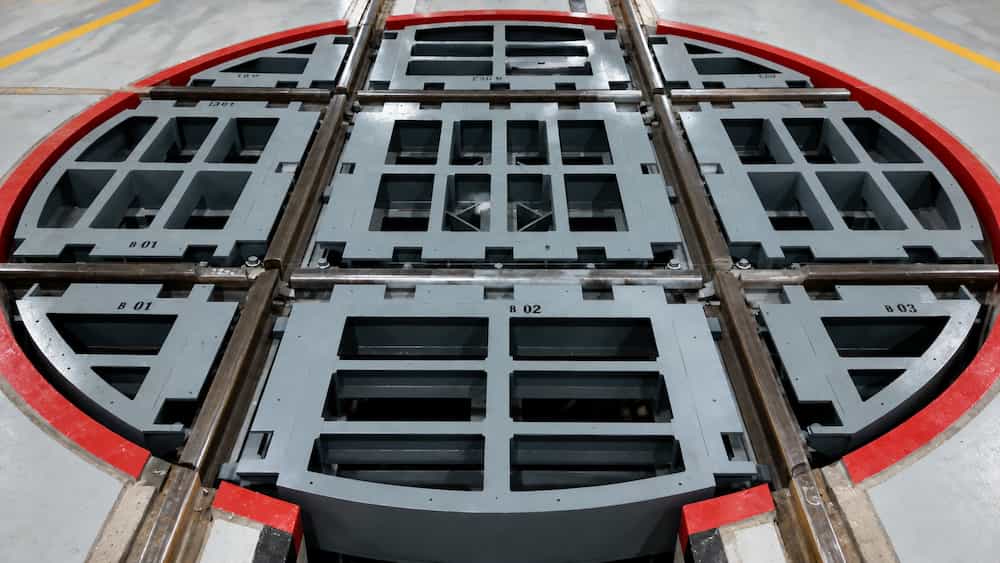
Turntable geometry, rail arrangement, load capacity and operating requirements can be configured around the project.
For 90° direction changes at track intersections in industrial workshops.
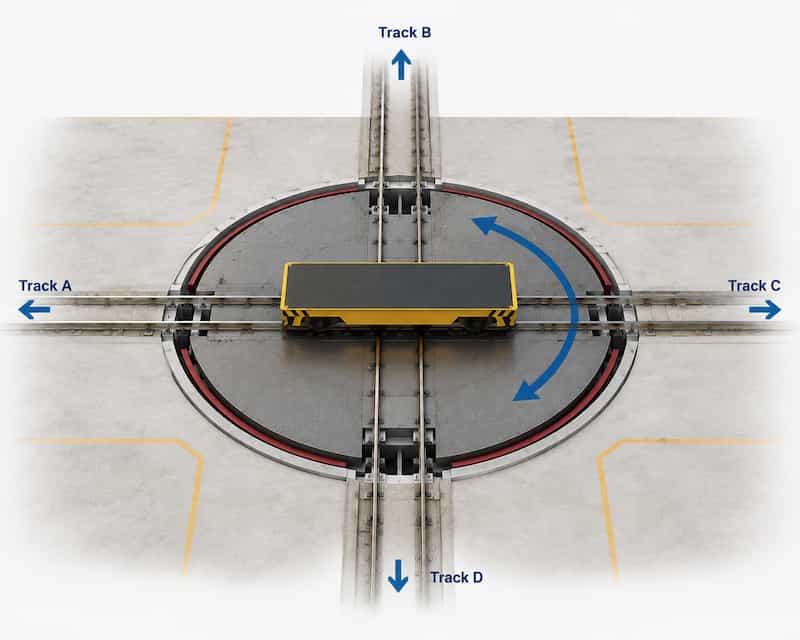
For branch-track layouts requiring controlled rail direction changes.
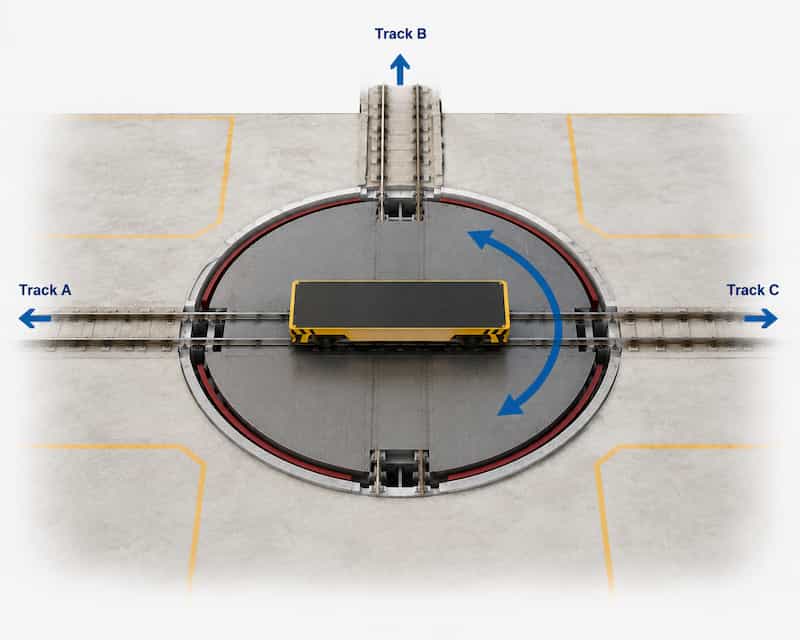
Developed for more complex workshop track systems and project-specific routing requirements.
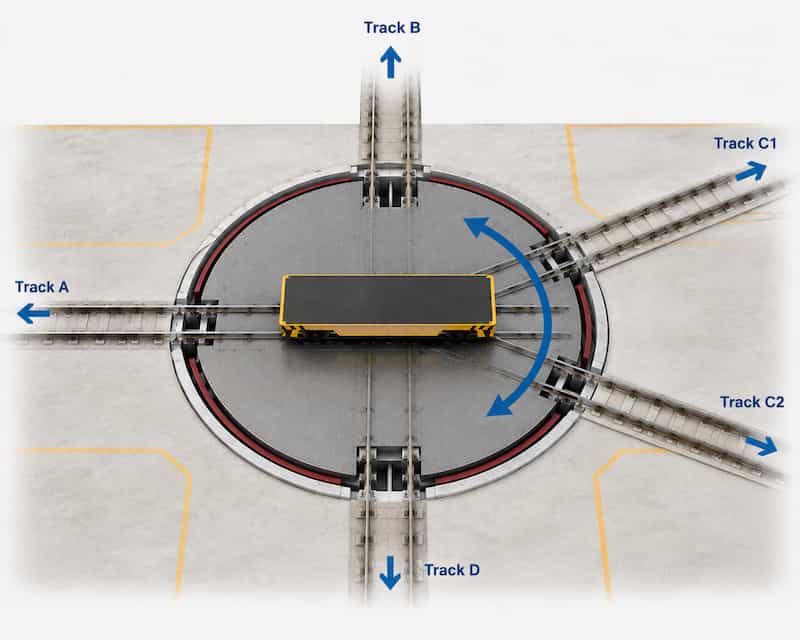
Designed for installation within a foundation pit where the platform integrates with the surrounding track.
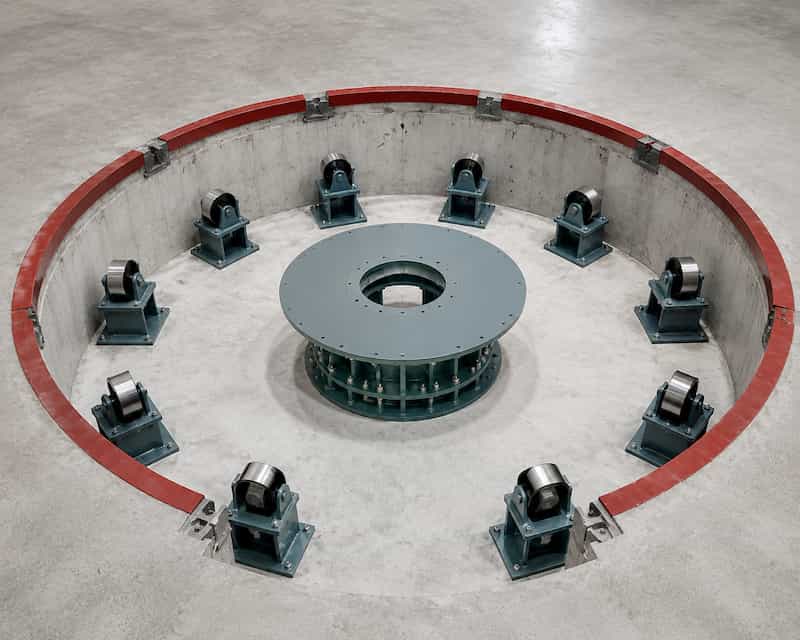
Rail turntables are engineered around the actual vehicle, track layout and installation conditions of each project.
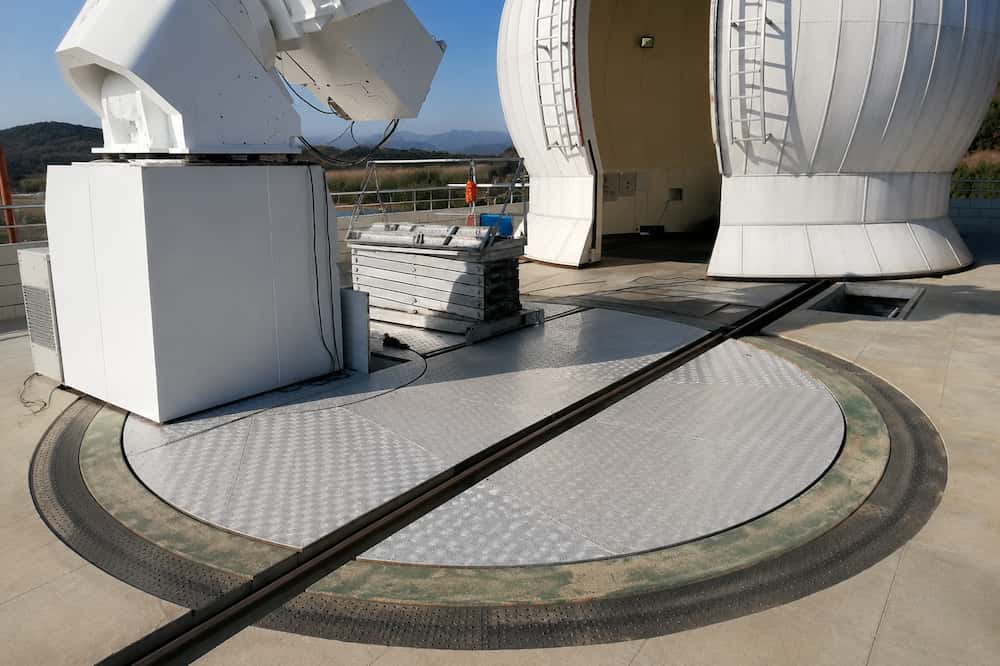
Talk with our engineers for technical support, custom solutions and fast quotation.
Our rail flatcar turntables are custom-engineered based on your specific vehicle and cargo requirements. We routinely design and manufacture heavy-duty turntables with capacities such as 30 tons, 50 tons, and beyond for industrial applications.
We utilize advanced proximity-switch positioning systems and variable frequency motors to ensure controlled, smooth stopping. This guarantees that the turntable's rails align perfectly flush with the existing workshop tracks.
Yes. We offer pit-mounted turntable configurations. The equipment is installed within a foundation pit so that the rotating platform and rails are completely flush with your finished floor, allowing safe passage for workers and other equipment.
Our turntables are ideal for 90° cross-track intersections, T-junction branch layouts, and complex multi-directional routing systems. The rotation range (e.g., 0°-90° or 360°) is customized to your layout.
Absolutely. We engineer the platform's rail center distance (gauge) and rail type (such as standard P43 steel rails) to perfectly match your existing industrial rail system.
For heavy-duty applications, we typically use a robust pin-gear drive system combined with a central rotating support and distributed support wheels. This ensures stable rotation even under imbalanced heavy loads.
Yes, we provide global service. We supply comprehensive CAD/PDF engineering drawings, foundation pit designs, and step-by-step installation guidance for projects worldwide.
To provide an accurate quote, please inform us of your required load capacity, track gauge, rail type, preferred platform diameter, and the specific turning angles required for your workshop layout.